
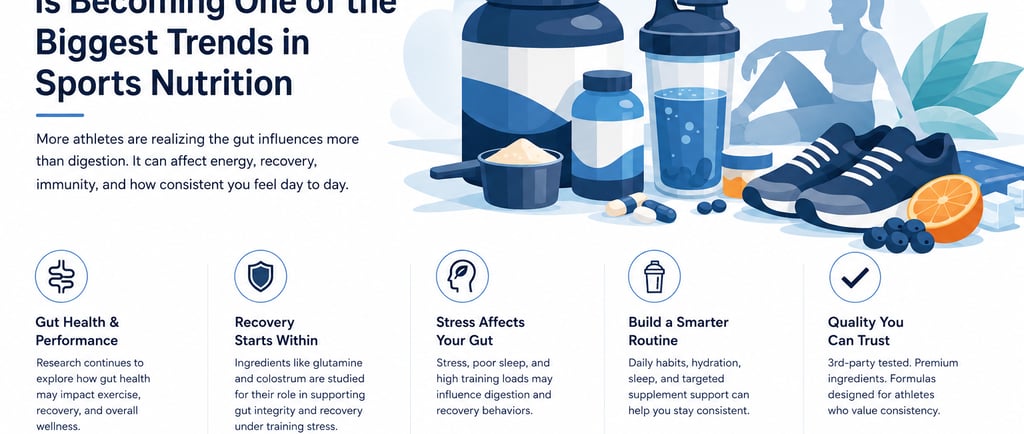
Why “Gut Performance” Is Becoming One of the Biggest Trends in Sports Nutrition
Gut health, probiotics, glutamine, and colostrum are becoming major trends in sports nutrition. Learn why athletes are connecting digestion, recovery, and performance consistency.
Held Performance
5/12/20263 min read
A few years ago, most athletes barely thought about gut health unless something went wrong.
Now it is becoming one of the fastest-growing conversations in sports nutrition.
And honestly, the reason is simple:
A lot of people are training hard while quietly dealing with problems that affect performance far more than they realize.
Things like:
bloating
inconsistent digestion
feeling heavy during training
poor recovery
unpredictable energy
constantly feeling “off” despite eating well
That shift is helping push “gut performance” into mainstream sports nutrition.
Not because it sounds trendy.
Because more athletes are realizing the gut influences much more than digestion alone.
Athletes are starting to connect digestion with performance
One of the biggest changes happening right now is awareness.
People are beginning to notice that:
poor digestion affects training quality
inconsistent eating affects recovery
stress affects the gut
hard training itself may increase gastrointestinal stress in some individuals
Research published in Frontiers in Nutrition and Sports Medicine has explored relationships between exercise stress, gastrointestinal function, recovery, and athlete wellness (Clark & Mach, 2016; de Oliveira & Burini, 2009).
This is especially noticeable in:
endurance athletes
hybrid athletes
high-volume training blocks
individuals under high stress loads
For many people, the issue is not motivation.
It is that their recovery systems never feel fully “settled.”
Gut health is no longer viewed as separate from recovery
One of the biggest trends in wellness right now is the idea that recovery is systemic.
People are moving away from thinking:
“Recovery = soreness only.”
Instead, consumers increasingly associate recovery with:
sleep quality
digestion
stress load
hydration
immune resilience
nervous system balance
Research published in Nutrients has continued exploring how gut microbiota and gastrointestinal integrity may interact with exercise stress and recovery behaviors in athletes.
That is one reason products centered around digestive support, probiotics, and recovery-focused wellness continue growing rapidly.
Products such as Gut Health Support, Probiotic Support, Glutamine Support, and Colostrum are increasingly being integrated into structured wellness-focused performance routines depending on individual needs and professional guidance.
Why glutamine and colostrum keep trending
Some ingredients continue appearing repeatedly in athlete-focused recovery conversations.
Two major examples:
glutamine
bovine colostrum
Research involving glutamine has explored its role in exercise recovery and gastrointestinal support under certain training conditions (Cruzat et al., 2018).
Meanwhile, research published in Nutrients and Sports Medicine has investigated bovine colostrum in relation to exercise stress and gastrointestinal permeability in athletes (Davison, 2016).
That does not mean these ingredients are magic solutions.
But it helps explain why interest in them continues growing among athletes focused on:
training consistency
recovery support
wellness routines
gut-focused performance strategies
Products such as Glutamine Support and Colostrum may fit structured routines depending on context and professional guidance.
Stress may be one of the biggest hidden performance disruptors
Another major trend:
Athletes are increasingly recognizing how stress affects performance outside the gym.
Work pressure.
Sleep disruption.
Travel.
High caffeine intake.
Constant stimulation.
All of these factors may influence digestion and recovery behaviors.
Research in Sports Medicine and Nutrients continues exploring relationships between stress physiology, sleep quality, recovery, and athletic readiness (Vitale et al., 2019).
That is one reason adaptogens, nighttime support products, and recovery-focused wellness systems continue gaining momentum.
Products such as Resurge, Adaptogen Blend, and Daily Wellness Support are increasingly becoming part of broader performance-focused routines.
Consumers are becoming more selective about supplements
Another noticeable shift:
People are becoming more skeptical of overloaded formulas and aggressive marketing.
Instead, many consumers are moving toward:
clinically studied ingredients
transparent labels
recovery-focused systems
third-party tested products
sustainable daily routines
Organizations such as NSF International and U.S. Pharmacopeia continue influencing consumer expectations around quality and manufacturing standards.
The trend is moving toward smarter, more integrated performance support.
Gut performance may become a long-term category, not a trend
Years ago, digestion was viewed as a niche wellness topic.
Now it is increasingly becoming part of:
sports nutrition
recovery culture
performance readiness
lifestyle wellness
And that shift may continue growing.
Because many athletes are discovering something important:
When digestion, recovery, hydration, and stress management improve together, training often feels more sustainable.
Final thought
The future of sports nutrition may not belong only to products that stimulate harder.
It may belong to products that help athletes feel more consistent, more balanced, and more prepared to repeat performance over time.
That includes:
recovery
hydration
sleep
stress management
gut-focused wellness support
And that conversation is only getting bigger.
This content is for informational purposes only. Supplement use, digestive support strategies, and recovery routines should always be individualized. What may be appropriate for one person may not be suitable for another due to differences in physiology, allergies, medications, gastrointestinal conditions, health status, and training demands. Individuals with dairy sensitivities or allergies should use additional caution with bovine colostrum products. Guidance from a qualified healthcare professional is strongly recommended before beginning any supplement routine.
These statements have not been evaluated by the Food and Drug Administration. These products are not intended to diagnose, treat, cure, or prevent any disease.