
Build a Better Training Recovery Routine
Build a better training recovery routine with sleep, nutrition, hydration, and smart intensity control to support performance and consistency.
Held Performance
5/4/20263 min read

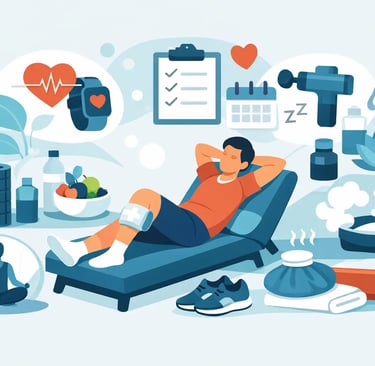
A hard session can make you feel productive. A smart training recovery routine is what lets you come back and do it again with quality. If your workouts are strong but your energy, soreness, sleep, or motivation keep sliding, recovery is usually the bottleneck - not effort.
Serious athletes recognize this shift. Early on, progress feels simple: train harder, add volume, repeat. Then performance plateaus, joints start signaling fatigue, sleep quality declines, and soreness lasts longer than expected. That is where a disciplined recovery system becomes part of the program.
What a training recovery routine actually does
Recovery is not passive. It is an active process of restoring systems stressed during training, including:
muscle tissue
hydration status
glycogen stores
nervous system balance
sleep quality
A structured routine helps reduce the gap between current performance capacity and next-session readiness.
Research in sports physiology supports the role of recovery strategies in maintaining performance consistency (Kellmann, 2010; Bishop et al., 2008).
Start with the foundations, not the hacks
Most recovery issues come from inconsistencies in foundational habits.
Sleep is the first checkpoint
Sleep is closely linked to:
muscle repair
cognitive function
recovery quality
perceived effort
Research supports the importance of sleep for recovery and performance adaptation (Dattilo et al., 2011).
Products such as Sleep Support, Night Recovery Formula, or Resurge may support structured nighttime routines when appropriate.
Nutrition supports adaptation
Post-training nutrition should support:
muscle repair (protein intake)
glycogen replenishment (carbohydrates
The International Society of Sports Nutrition supports adequate protein intake for active individuals.
Products such as Whey Protein Isolate, Protein Blend, or Recovery Formula may support intake when needed.
Hydration is a performance variable
Even mild dehydration may:
reduce performance
increase perceived effort
impact recovery
Research supports hydration as a key factor in performance and recovery (Sawka et al., 2007; Shirreffs, 2010).
Products such as Hydration Support or Electrolyte Formula may support fluid and mineral balance depending on individual needs.
The four phases of an effective training recovery routine
Right after training
Focus on:
light movement
hydration
nutrient intake
A short transition phase may support recovery without adding stress.
The next 6 to 12 hours
Recovery continues beyond the session.
This phase includes:
proper nutrition
hydration
managing total stress load
Overnight
Sleep is a primary recovery driver.
Consistent sleep habits may support recovery capacity and training readiness.
The day after
Low-intensity movement such as walking or mobility work may support recovery in some cases.
However, excessive activity during fatigue may add unnecessary stress.
Recovery methods that may support performance
Some tools may be useful depending on context:
mobility work
soft tissue work
cold exposure (context-dependent)
compression or massage tools
Their effectiveness may vary depending on training phase and individual response.
Supplement support within a recovery routine
Supplementation may support recovery when aligned with real needs.
Examples include:
Probiotic Support
Quality matters.
Organizations such as NSF International and U.S. Pharmacopeia provide recognized frameworks for supplement quality.
Signs your recovery routine may need adjustment
Potential indicators include:
reduced performance consistency
persistent fatigue
poor sleep quality
prolonged soreness
decreased motivation
These signals may indicate the need for adjustments in training or recovery strategy.
Build a routine you can repeat
The most effective recovery routine is one that is sustainable under real conditions.
Focus on:
consistent sleep schedule
adequate nutrition
proper hydration
Then add targeted support as needed.
Held Performance is designed for individuals who approach recovery with the same discipline as training.
Final thought
A structured recovery routine is part of performance, not separate from it.
Consistency in recovery habits may support long-term training outcomes.
This content is for informational purposes only. Supplement use, training strategies, and recovery approaches should always be individualized. What may be appropriate for one person may not be suitable for another due to differences in physiology, medications, health status, and training demands. Guidance from a qualified healthcare professional is strongly recommended before implementing any supplementation or recovery strategy.
These statements have not been evaluated by the Food and Drug Administration. These products are not intended to diagnose, treat, cure, or prevent any disease.