
Antioxidant Support for Athletes Explained
Learn how antioxidant support for athletes can aid recovery, training balance, and resilience without blunting the adaptive response to hard work.
Held Performance
4/24/20263 min read

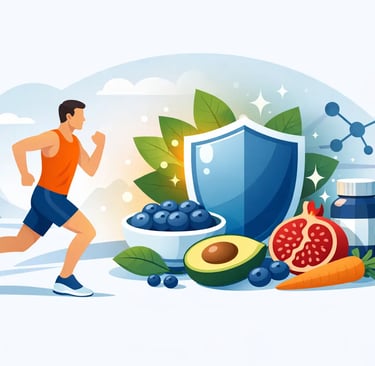
You finish a demanding training block feeling strong, but not sharp. Legs stay heavy longer than expected. Sleep slips. Recovery feels incomplete. That is often where the conversation around antioxidant support for athletes begins - not with hype, but with the reality that hard training creates stress, and managing that stress can matter when performance demands stay high.
The key is getting the balance right. Oxidative stress is not automatically negative. It is part of the signaling process involved in adaptation to training. But when training load, lifestyle stress, poor sleep, travel, under-fueling, or repeated high-intensity sessions accumulate, that stress may outpace recovery capacity. In those situations, targeted antioxidant support may be worth evaluating.
What antioxidant support for athletes actually means
Exercise increases reactive oxygen species production. That sounds dramatic, but it is a normal part of metabolism.
During demanding sessions:
oxygen use rises
tissues are stressed
repair signaling increases
adaptation processes are triggered
Research in exercise physiology supports that oxidative signaling is involved in mitochondrial adaptation and endurance development (Powers & Jackson, 2008).
Problems may appear when the total stress burden remains elevated for prolonged periods.
Instead of bouncing back efficiently, an athlete may notice:
lingering soreness
flatter training quality
reduced resilience
slower recovery
Antioxidant support for athletes is not about eliminating stress. It is about helping recovery remain productive.
Why more is not always better
This is where nuance matters.
Large doses of isolated antioxidants used chronically may blunt some beneficial training adaptations in certain contexts.
Studies involving high-dose vitamin C and E supplementation have suggested potential interference with exercise-induced adaptations when misused (Ristow et al., 2009).
That does not mean antioxidants are “bad.” It means timing, dosage, and context matter.
The goal is measured support, not megadosing.
Food first, then targeted support
The foundation should remain nutrition.
Foods commonly associated with antioxidant compounds include:
berries
tart fruits
leafy greens
beets
pomegranate
turmeric
ginger
green tea
Whole foods provide broader nutrient matrices beyond isolated compounds.
That said, athletes in demanding phases may not always execute nutrition perfectly. Travel, schedule stress, appetite suppression, or repeated sessions can create gaps.
That is where structured support may help complement fundamentals.
When athletes may benefit most from antioxidant support
Support may be more relevant during phases such as:
high-volume endurance blocks
repeated competition periods
calorie restriction phases
travel-heavy schedules
intensified strength cycles
poor sleep periods
Recovery demand is not created only in training. Life stress matters too.
Ingredients that make more sense than hype
Not all antioxidant products are built equally.
Athletes may prefer formulas emphasizing:
transparent labeling
meaningful dosing
quality sourcing
targeted ingredients
manufacturing standards
Polyphenol-rich plant compounds and botanical extracts are often used in this category.
Products such as Daily Wellness Support, Adaptogen Blend, or Recovery Formula may fit routines depending on ingredient profile and individual needs.
Organizations such as NSF International and U.S. Pharmacopeia provide recognized frameworks for supplement quality and verification.
How to use antioxidant support without working against training
The body requires training stress to adapt.
A more strategic approach may involve using supportive tools during higher-stress phases rather than relying on heavy year-round use.
Needs also vary by goal.
An athlete chasing peak adaptation in a build phase may approach support differently than someone managing accumulated fatigue during competition density.
Both approaches can be performance-focused.
Red flags athletes should avoid
Use caution with products that claim to:
eliminate soreness overnight
detox the body instantly
replace recovery habits
transform performance rapidly
Also be cautious with:
proprietary blends
vague ingredient amounts
exaggerated medical-style claims
The best support is usually clear, disciplined, and repeatable.
The real performance mindset
Athletes do not need miracle language.
They need tools that respect the work.
Antioxidant support may help support resilience, recovery capacity, and consistency when training demands are elevated.
But support works best when fundamentals are already strong:
nutrition
sleep
hydration
programming
stress management
Train hard, recover with intent, and choose support that matches your standards.
This content is for informational purposes only. Supplement use should always be individualized. What may be appropriate for one person may not be suitable for another due to differences in physiology, medications, health status, and training demands. Guidance from a qualified healthcare professional is strongly recommended before starting any supplement routine.
These statements have not been evaluated by the Food and Drug Administration. These products are not intended to diagnose, treat, cure, or prevent any disease.