
Why “Recovery Fatigue” Is Becoming One of the Biggest Problems in Modern Fitness
“Recovery fatigue” is becoming one of the biggest conversations in modern fitness. Learn why athletes are rethinking sleep, hydration, stress management, and recovery-focused wellness support.
Held Performance
5/16/20264 min read
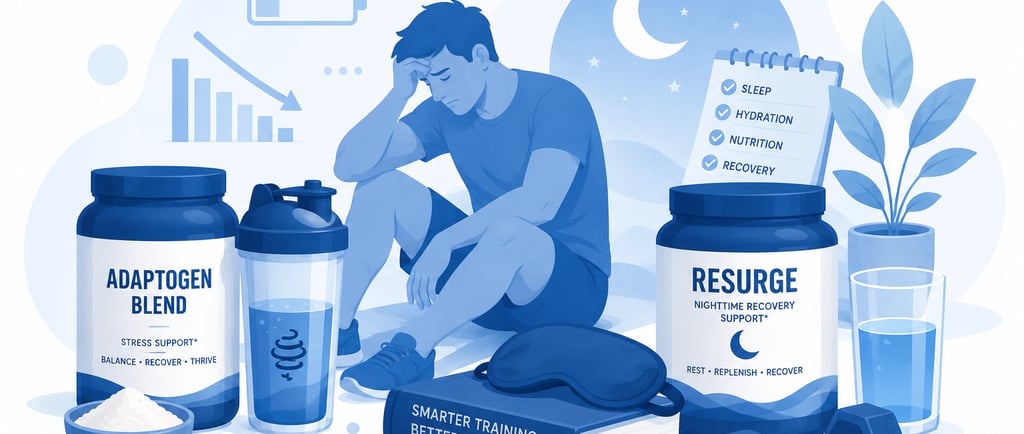
More athletes are reporting exhaustion, inconsistent recovery, poor sleep, mental fatigue, and declining training consistency despite working hard. Here’s why recovery-focused wellness is rapidly becoming one of the biggest trends in sports nutrition.
For years, fitness culture rewarded one thing above everything else:
Intensity.
Harder workouts.
More stimulants.
More volume.
More grind.
And for a while, that approach felt productive.
Until more people started noticing something uncomfortable:
They were training consistently… but still feeling constantly behind.
Not lazy.
Not unmotivated.
Not “soft.”
Just exhausted in a way that sleep, caffeine, and motivation no longer seemed to fully fix.
That shift is helping create one of the fastest-growing conversations in modern sports nutrition:
“Recovery fatigue.”
Not necessarily overtraining in the clinical sense.
But the feeling that recovery quality never fully catches up with output.
And increasingly, active people everywhere are reporting the same pattern:
waking up tired
feeling mentally flat during training
struggling with recovery consistency
relying heavily on stimulants
sleeping without feeling restored
feeling physically present but neurologically drained
That conversation is rapidly reshaping the supplement industry.
Modern life may be amplifying recovery fatigue
Training stress no longer exists in isolation.
Today, many active individuals are balancing:
hard workouts
work pressure
financial stress
late-night screen exposure
inconsistent sleep
travel
high caffeine intake
constant mental stimulation
Research published in Sports Medicine and Nutrients continues exploring relationships between sleep quality, psychological stress, nervous system fatigue, and athletic performance consistency (Fullagar et al., 2015; Vitale et al., 2019).
For many people, the issue is no longer motivation.
It is accumulated recovery debt.
Recovery is becoming part of performance culture
One of the biggest mindset shifts in modern fitness:
Recovery is no longer viewed as passive.
It is increasingly being treated as part of performance itself.
That includes growing interest in:
hydration support
nighttime routines
stress management
adaptogens
gut-focused wellness
non-stimulant performance support
Research published in the Journal of the International Society of Sports Nutrition continues discussing how recovery quality may influence adaptation, readiness, and long-term training consistency (Kerksick et al., 2018).
That is one reason products such as Resurge, Hydration Support, Adaptogen Blend, and Daily Wellness Support continue gaining momentum among active consumers.
Sleep quality is becoming a major performance conversation
One of the most noticeable trends right now:
Athletes and gym-goers are becoming increasingly aware of how poor sleep patterns affect training quality.
Research in exercise physiology continues exploring relationships between sleep quality, recovery, and athletic readiness (Dattilo et al., 2011).
Many active individuals now report:
feeling tired despite sleeping
waking up mentally exhausted
struggling to “shut down” at night
relying on caffeine to compensate for poor recovery habits
That is helping fuel growing interest in:
nighttime support formulas
magnesium-focused products
adaptogenic wellness routines
structured evening recovery habits
Products such as Resurge, Nighttime Support, and Daily Wellness Support may fit structured recovery-focused routines depending on individual needs and professional guidance.
Adaptogens and non-stimulant wellness continue trending
Another major shift:
Consumers are becoming more cautious about constant overstimulation.
Years of:
aggressive pre-workouts
excessive caffeine
poor sleep habits
“push harder” culture
…are pushing many active individuals toward more balanced performance strategies.
Research involving adaptogenic compounds continues exploring how certain ingredients may interact with stress-response pathways and recovery behaviors under specific conditions.
Examples include:
Wankhede et al. (2015), which investigated ashwagandha supplementation alongside resistance training.
Panossian & Wikman (2010), which reviewed adaptogens and stress physiology.
Products such as RIGHT, Adaptogen Blend, and Resurge are increasingly becoming part of broader recovery-focused wellness systems.
Gut health is becoming part of the recovery conversation
Another growing trend:
Many athletes are beginning to connect digestion with recovery quality and training consistency.
Consumers increasingly report issues such as:
bloating during training
inconsistent digestion
poor appetite regulation under stress
feeling physically “off” despite eating clean
Research published in Frontiers in Nutrition and Sports Medicine has explored relationships between exercise stress and gastrointestinal function in athletes (Clark & Mach, 2016).
That shift is driving increasing interest in:
probiotics
glutamine
colostrum
gut-focused wellness support
Products such as Gut Health Support, Glutamine Support, Colostrum, and Probiotic Support are increasingly being integrated into recovery-oriented performance systems.
Consumers are becoming more selective about supplements
Another major shift happening now:
Consumers are becoming more skeptical of:
overloaded formulas
excessive stimulants
aggressive marketing claims
“hardcore” branding without transparency
Instead, many active individuals are prioritizing:
clinically studied ingredients
evidence-informed routines
third-party testing
structured wellness habits
sustainable daily performance support
Organizations such as NSF International and U.S. Pharmacopeia continue influencing expectations around supplement quality and manufacturing standards.
The future of sports nutrition may be sustainable performance
One of the biggest changes happening now:
People are no longer asking only:
“How hard can I push?”
They are increasingly asking:
“How consistently can I perform without burning myself out?”
That question is changing the supplement industry rapidly.
Because long-term performance is increasingly being connected to:
sleep quality
hydration
recovery consistency
nervous system balance
digestive wellness
smarter daily routines
And recovery-focused wellness is rapidly moving toward the center of that conversation.
Final thought
The future of sports nutrition may not belong only to products that create intensity.
It may belong to products that help people:
recover more intentionally
sustain performance longer
manage modern stress better
support healthier recovery habits
maintain consistency over time
And that shift may define the next era of modern fitness.
This content is for informational purposes only. Supplement use, recovery routines, hydration strategies, and wellness practices should always be individualized. What may be appropriate for one person may not be suitable for another due to differences in physiology, medications, health status, stimulant sensitivity, digestive conditions, sleep quality, and training demands. Guidance from a qualified healthcare professional is strongly recommended before beginning any supplement routine.
These statements have not been evaluated by the Food and Drug Administration. These products are not intended to diagnose, treat, cure, or prevent any disease.