
Why Do Some Workouts Feel So Much Harder Than Others?
Why do some workouts feel dramatically harder than others? Learn why sleep quality, hydration habits, recovery routines, creatine, and nighttime wellness are becoming major trends in sports nutrition and athlete recovery.
Held Performance
6/15/20263 min read
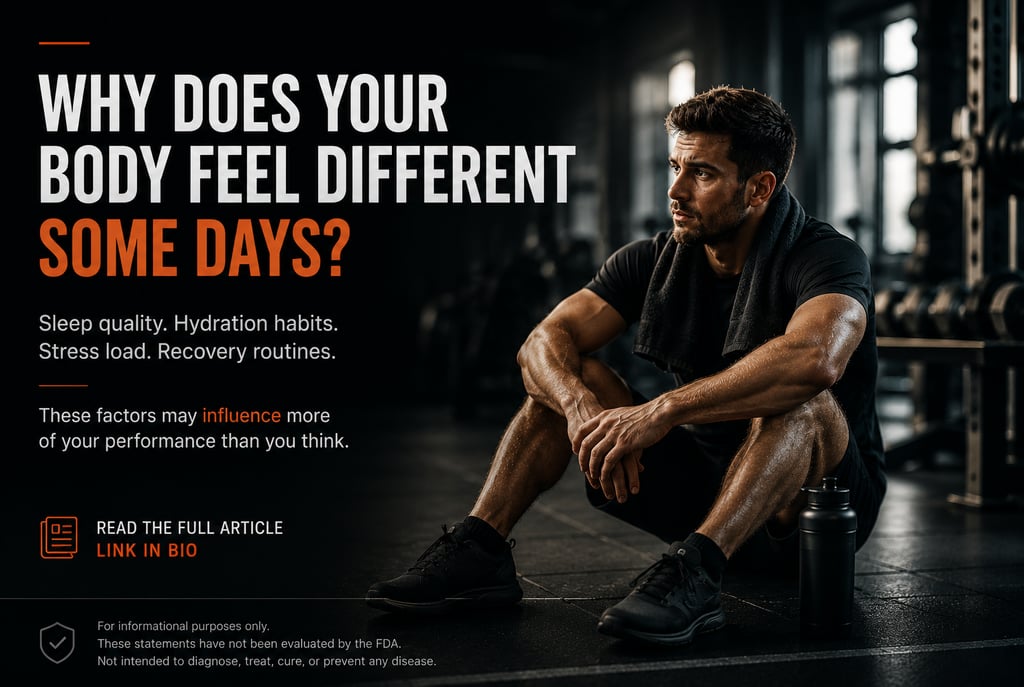
Why Do Some Workouts Feel So Much Harder Than Others?
You slept.
You followed the program.
You took your training seriously.
So why does one workout feel incredible…
…and the next one feels like your body completely forgot how to perform?
Most athletes know this feeling.
One day:
your pace feels smooth
your focus is sharp
your body responds
training feels natural
Then suddenly:
The weights feel heavier.
Your motivation disappears halfway through the session.
Your body feels “off” before the workout even really begins.
And the frustrating part?
Nothing obvious changed.
Same athlete.
Same gym.
Same routine.
Different result.
That experience is becoming one of the biggest conversations in modern sports nutrition and athlete wellness.
Because more people are starting to realize something important:
Performance is not only built during training.
It is shaped by everything happening between workouts too.
The Problem Most Athletes Don't Notice Right Away
Most people blame:
motivation
discipline
laziness
lack of mental toughness
But many times, the issue may be much less dramatic.
Things like:
poor sleep quality
inconsistent hydration
high stress
nonstop stimulation
poor nighttime habits
recovery inconsistency
can quietly affect how training feels from day to day.
Research published in Sports Medicine by Fullagar et al. (2015) explored the relationship between sleep, recovery behaviors, cognitive function, and athletic performance consistency.
And honestly?
Most athletes already feel this in real life before they ever read a study about it.
You can feel it when:
warm-ups feel unusually heavy
your body never fully feels “fresh”
caffeine stops feeling effective
your focus disappears halfway through training
your body feels like it's still carrying yesterday's workout
That last one is becoming incredibly common.
Why Recovery Is Becoming One of the Biggest Trends in Sports Nutrition
For years, sports nutrition was obsessed with intensity.
More caffeine.
More stimulants.
More “push harder” culture.
But now the conversation is changing.
Athletes are becoming less interested in feeling overstimulated…
…and more interested in feeling consistent.
That is why products and routines centered around:
hydration
sleep quality
nighttime wellness
recovery-focused habits
adaptogens
structured supplementation
are becoming increasingly popular.
Not because people want shortcuts.
Because they want to stop feeling constantly behind physically.
Why Sleep Quality Is Becoming Such a Big Conversation
One of the most common things active people report now is:
“I slept… but I still don't feel recovered.”
That is one reason nighttime wellness routines are becoming more important in sports nutrition.
Research continues exploring how sleep quality may influence cognitive readiness, recovery behaviors, and athletic consistency.
This is where products such as Sleep Strips and Resurge fit naturally into broader nighttime wellness routines.
Not as “miracle fixes.”
Not as medical solutions.
But as part of a more intentional recovery-focused lifestyle.
And honestly, that is where the industry is moving.
Away from:
extreme stimulation
“hardcore” marketing
endless caffeine
And toward:
sustainability
consistency
smarter recovery habits
Why Hydration Feels Different Than People Expect
Another trend growing rapidly:
Hydration support.
Many athletes think dehydration only matters during long endurance sessions.
But in real life, even mild hydration inconsistency can make training feel noticeably different.
That “flat” feeling during training…
The feeling that your body just isn't responding normally…
Sometimes the issue is not motivation at all.
Research from Sawka et al. in Medicine & Science in Sports & Exercise discussed hydration as part of broader exercise performance and recovery planning.
That growing awareness is why products such as Hydration Powder are becoming more common in structured performance routines.
Especially among:
hybrid athletes
runners
people training in heat
high-frequency gym users
Why Creatine Is Trending Again
Another huge shift happening right now:
People are rediscovering Creatine.
Not just bodybuilders.
Everyone.
Because athletes are becoming more educated.
Creatine is one of the most researched ingredients in sports nutrition and continues being discussed in relation to exercise performance and training routines.
But what matters most is HOW people are talking about it now.
Less:
“massive muscle gains.”
More:
consistency
training quality
sustainable performance routines
That shift matters.
Because modern athletes increasingly care about feeling functional consistently — not just stimulated temporarily.
The Real Trend Isn't More Supplements
The real trend is better systems.
Better:
nighttime habits
hydration habits
recovery routines
consistency
structure
That is why products such as:
fit naturally into the direction sports nutrition is moving.
Not because they “fix” performance.
But because athletes are paying more attention to the habits surrounding performance.
And honestly?
That may be the smartest shift the industry has made in years.
Final Thought
Sometimes the issue isn't that you're unmotivated.
Sometimes your body is simply asking for better recovery habits.
And more athletes are finally starting to listen.
Research Referenced
Fullagar HHK et al. Sleep and Athletic Performance. Sports Medicine, 2015.
Sawka MN et al. Exercise and Fluid Replacement. Medicine & Science in Sports & Exercise.
Kreider RB et al. ISSN Position Stand: Creatine Supplementation. Journal of the International Society of Sports Nutrition.
This content is for informational purposes only. Supplement use, hydration strategies, recovery habits, and wellness routines should always be individualized. Consult a qualified healthcare professional before beginning any supplement routine.
These statements have not been evaluated by the Food and Drug Administration. These products are not intended to diagnose, treat, cure, or prevent any disease.