
Best Supplements for Training Endurance
Find the best supplements for training endurance, from hydration to nitrate support, with practical guidance on timing, dosing, and quality.
Held Performance
3/26/20263 min read
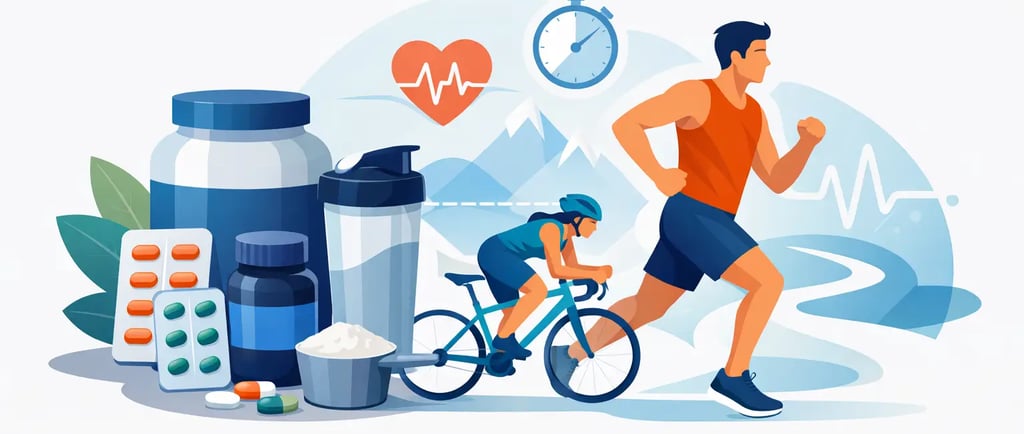

You do not build endurance by guessing. Long sessions, repeat efforts, and race-day composure all depend on how consistently your body can sustain quality work as fatigue accumulates. That is where supplements for training endurance may play a supportive role — not as a replacement for structured training, sleep, or nutrition, but as an adjunct to help maintain performance and recovery capacity.
For endurance athletes and high-demand training individuals, the objective is not to accumulate products, but to identify what may support output, hydration, recovery, and consistency over time. Some supplements may provide acute support before or during training, while others may contribute to long-term training capacity.
What supplements for training endurance are designed to support
Evidence-based endurance strategies typically fall into several categories:
Additionally, recovery systems — including sleep quality and overall physiological resilience — play a central role in sustaining endurance performance over time.
The most relevant categories of supplements for training endurance
Electrolytes and hydration support
Hydration status is closely associated with thermoregulation, cardiovascular strain, and exercise capacity. Electrolytes such as sodium, potassium, and magnesium are involved in fluid balance and neuromuscular function.
Products like Hydration Support or Electrolyte Formula may be useful during prolonged sessions, high sweat conditions, or repeated training exposures.
Research indicates that fluid and electrolyte balance may influence endurance performance, particularly in heat or extended duration exercise (Sawka et al., 2007; Shirreffs, 2010).
Carbohydrate and intra-workout fuel
Carbohydrate availability is a primary determinant of endurance performance during moderate to high intensity exercise.
Options such as Intra-Workout Fuel, Carbohydrate Drink Mix, or Endurance Fuel Blend may help support energy availability during longer sessions.
According to the consensus statement from the International Olympic Committee, carbohydrate intake during prolonged exercise is associated with maintained performance and reduced fatigue (Burke et al., 2011).
Caffeine for perceived effort and sustained output
Caffeine is one of the most extensively studied compounds in sports performance. It may support alertness and reduce perceived exertion in some individuals.
Products such as Pre-Workout Formula or Energy Support Strips containing caffeine may be used strategically depending on timing and individual tolerance.
A position stand from the International Society of Sports Nutrition highlights caffeine’s potential role in supporting endurance performance (Guest et al., 2021).
Use should be individualized, as excessive intake may negatively impact sleep and recovery.
Nitrates and blood flow support
Dietary nitrates, commonly derived from beetroot, may contribute to nitric oxide production, which is involved in vascular function.
Supplements such as Nitric Oxide Support or Beetroot Extract Formula may support exercise efficiency in some contexts.
Systematic reviews suggest nitrates may reduce oxygen cost during submaximal exercise and support endurance performance under certain conditions (Jones et al., 2018; Senefeld et al., 2020).
Beta-alanine and buffering capacity
Beta-alanine contributes to muscle carnosine levels, which are associated with intracellular buffering capacity during high-intensity efforts.
Products such as Beta-Alanine Formula or Performance Buffer Complex may be relevant for athletes performing interval-based or mixed-intensity endurance training.
The International Society of Sports Nutrition notes that beta-alanine supplementation may support performance in efforts involving high-intensity output (Trexler et al., 2015).
Recovery, sleep, and resilience support
Endurance performance is strongly influenced by recovery quality. Sleep, hydration, and overall physiological balance directly impact adaptation to training.
Products such as Sleep Support, Recovery Formula, or Adaptogen Blend may support recovery-related processes when used appropriately.
Sleep research demonstrates its role in hormonal regulation, tissue repair, and performance readiness (Dattilo et al., 2011; Van Cauter et al., 2000).
Held Performance emphasizes this broader approach, recognizing that consistent training outcomes depend on both performance and recovery systems.
How to choose endurance supplements effectively
Start with your limiting factor (always advised by your healthcare professional):
Low energy → consider Intra-Workout Fuel
High sweat loss → prioritize Hydration Support
Poor recovery → focus on Recovery Formula or Sleep Support
Then evaluate:
Avoid proprietary blends without disclosed quantities. Understanding what you are consuming is essential for both safety and performance strategy.
A practical approach to building a supplement strategy
A foundational setup may include:
Hydration Support for long or hot sessions
Intra-Workout fuel for extended efforts
Caffeine-based support for key sessions (optional)
Additional options like Nitric Oxide Support or Beta-Alanine Formula may be layered based on training demands.
If recovery is the limiting factor, prioritizing sleep and recovery support often yields more meaningful results than adding additional stimulants.
What matters on the label
A high-quality supplement should clearly communicate:
Intended use
Ingredient composition
Dosing strategy
Quality and testing standards
In endurance training, consistency and precision matter more than short-term stimulation.
Final perspective
You are not trying to feel more prepared — you are trying to be more prepared.
That means selecting tools that may support sustained performance, recovery, and consistency over time, always within the context of structured training and proper nutrition.
Train with intent. Supplement with the same standard.
These statements have not been evaluated by the Food and Drug Administration. These products are not intended to diagnose, treat, cure, or prevent any disease.