
How to Support Athletic Hydration Right
Learn how to support athletic hydration with smart fluid, sodium, and timing strategies that help sustain endurance, recovery, and output.
Held Performance
4/19/20263 min read
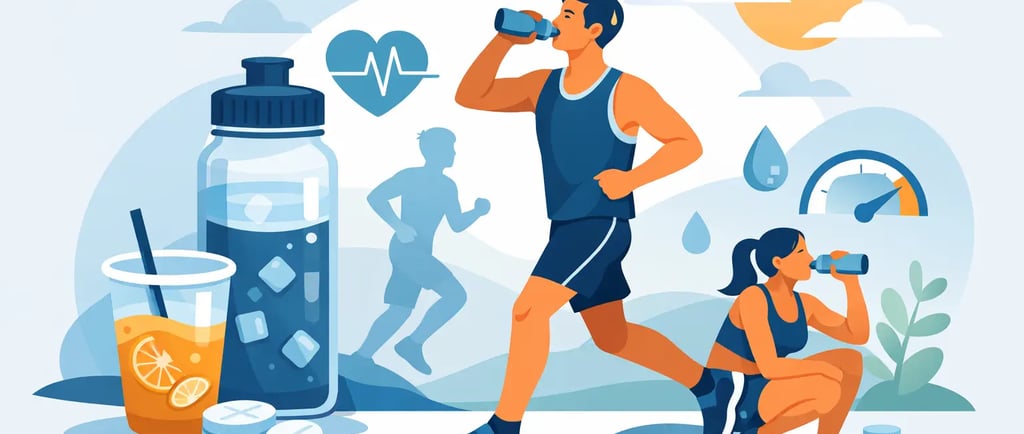
A hard training session can fall apart fast when hydration is off by even a small margin. If you want to know how to support athletic hydration, the answer is not just drinking more water. It is building a system that matches your training load, sweat rate, environment, and recovery demands.
Why athletic hydration is a performance variable
Hydration is not a side habit. It is part of output, coordination, endurance, and recovery. When fluid levels drop, blood volume can decline, heart rate may climb, and effort can feel harder than it should.
Research in sports physiology consistently shows that hydration status can influence endurance, thermoregulation, and perceived effort (Sawka et al., 2007; Shirreffs, 2010).
That matters whether you are chasing a PR, grinding through conditioning work, or trying to stay sharp in a long lifting session.
The bigger issue is that dehydration rarely announces itself early. Many athletes do not notice a problem until pace drops, focus slips, or cramping risk starts to rise. By that point, performance has already taken a hit.
Supporting hydration means staying ahead of the drop, not reacting after it shows up.
There is also a trade-off to respect. More fluid is not always better. Overdrinking plain water can dilute sodium levels and leave you feeling bloated or flat. Precision matters.
How to support athletic hydration before training
The strongest hydration strategy starts before the first warm-up set or first mile.
A practical approach is to hydrate steadily throughout the day instead of relying on large fluid intake right before training.
Sodium also plays a role in fluid balance and retention. Athletes who sweat more or train in demanding environments may benefit from including electrolytes as part of their hydration strategy.
Products such as Hydration Support or Electrolyte Formula may help support fluid and mineral balance depending on training conditions and individual needs.
Your environment changes the plan
Environmental conditions influence hydration needs.
Heat, humidity, altitude, session length, and clothing can all affect sweat rate and fluid loss.
Hydration strategies should adapt accordingly.
During training, match intake to the work
Hydration needs vary depending on session demands.
For shorter sessions, water may be sufficient for some individuals. For longer or higher-intensity sessions, electrolytes may become more relevant.
Sodium is a key electrolyte due to its role in fluid balance and its loss through sweat.
Carbohydrates may also play a role during extended efforts by supporting energy availability and fluid absorption.
How to support athletic hydration without guessing
Individual variability in sweat rate can be significant.
Tracking body weight changes before and after training can help estimate fluid loss and guide hydration strategies.
Monitoring performance indicators such as effort level, focus, and consistency can also provide useful feedback.
Recovery starts with replacing what you lost
Post-training hydration supports recovery.
Replacing both fluid and electrolytes can help restore balance more effectively than fluid alone.
A structured post-training routine may include fluids, electrolytes, and a balanced meal.
Products such as Hydration Support or Electrolyte Formula may support post-training rehydration when appropriate.
Common hydration mistakes that hold athletes back
relying only on thirst
ignoring electrolytes
overconsuming fluid without balance
not adjusting for individual response
A structured approach tends to support better consistency.
Build a hydration system you can actually follow
Consistency is key.
Hydration strategies should align with training schedule, environment, and individual response.
Adjustments can be made based on performance feedback and recovery quality.
This content is provided for informational purposes only. Hydration and supplement strategies should always be individualized, as what may be appropriate for one person may not be suitable for another due to differences in physiology, health status, medications, and training demands. Guidance from a qualified healthcare professional is strongly recommended.
These statements have not been evaluated by the Food and Drug Administration. These products are not intended to diagnose, treat, cure, or prevent any disease.