
Do Athletes Need Sleep Supplements?
Do athletes need sleep supplements? Learn when they help, when they do not, and how to support recovery, performance, and sleep quality safely.
Held Performance
4/10/20262 min read
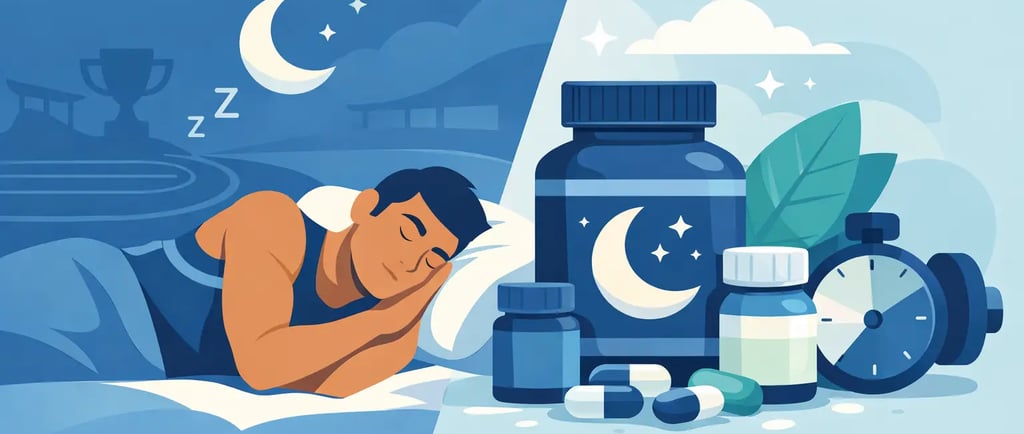
A hard training block can affect sleep before it improves performance. You finish a late session, your legs are fatigued, your nervous system is still active, and suddenly the question becomes real: do athletes need sleep supplements, or is better discipline enough?
The honest answer is that most athletes do not need sleep supplements all the time. But some athletes may benefit from them in the right situation, with the right ingredients, and with appropriate expectations. Sleep support is not a shortcut for poor habits. It is a tool.
Do athletes need sleep supplements for recovery?
Sleep is one of the few recovery variables that affects multiple systems at once. It influences reaction time, decision-making, glycogen restoration, muscle repair, hormone balance, immune function, and perceived effort.
Sleep research consistently demonstrates its role in recovery, hormonal balance, and performance readiness (Dattilo et al., 2011; Van Cauter et al., 2000).
That does not automatically mean a supplement is the answer.
For many athletes, sleep challenges are related to:
timing inconsistency
late caffeine intake
screen exposure
stress
travel
If those factors are not addressed, supplementation may have limited impact.
When sleep supplements may actually help
Some athletes may benefit from targeted support in specific situations:
late-night training sessions
travel across time zones
high stress training blocks
difficulty winding down
Products such as Sleep Support or Night Recovery Formula may support relaxation and sleep consistency when used appropriately.
The goal is not sedation. The goal is to support restorative sleep without negatively affecting next-day performance.
What ingredients matter most
Melatonin is commonly used, particularly for circadian rhythm adjustment. It may be useful in cases such as jet lag or schedule disruption, depending on dose and timing.
Magnesium may support relaxation, particularly in individuals with higher training demands or lower intake. Options such as Magnesium Support may fit structured routines.
L-theanine may support calmness without strong sedation.
Botanical ingredients such as ashwagandha may support stress response. Products such as Adaptogen Blend may be relevant depending on individual needs.
Responses vary, which is why formulation, dosing, and individual tolerance matter.
What sleep supplements cannot fix
If core habits are not aligned, supplements will not compensate.
late stimulant use
inconsistent schedule
poor nutrition
high stress
These factors can limit recovery regardless of supplementation.
There is also a performance consideration. If a product causes grogginess or reduced alertness, it may negatively affect training quality.
How athletes should decide whether to use one
Start by identifying the specific issue.
If the limitation is behavioral (timing, caffeine, stress), address that first.
If the issue persists despite consistent habits, targeted supplementation may be considered.
Precision matters. Testing response during regular training periods is recommended before relying on any routine.
A better baseline before supplements
Before adding anything, optimize:
sleep schedule
caffeine timing
nutrition
environment (light, temperature)
pre-sleep routine
If these adjustments improve sleep, supplementation may not be necessary.
So, do athletes need sleep supplements?
Some may benefit in specific situations. Most do not need them by default.
Products such as Sleep Support, Night Recovery Formula, or Adaptogen Blend may support sleep routines when aligned with individual needs and training demands.
The key is disciplined use, not dependence.
This content is provided for informational purposes only. Supplement use should always be individualized, as a product that may be appropriate for one person may not be suitable for another due to differences in physiology, health status, medications, and training demands. Guidance from a qualified healthcare professional is strongly recommended before starting any supplement routine.
These statements have not been evaluated by the Food and Drug Administration. These products are not intended to diagnose, treat, cure, or prevent any disease.